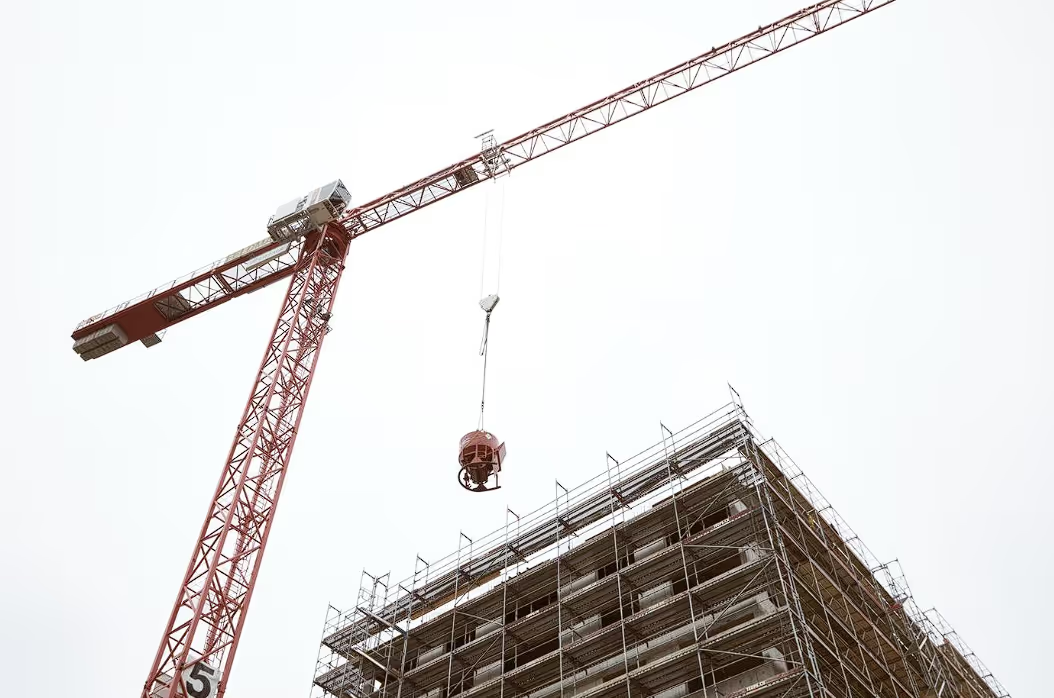
A construction site and the historic district? A winning combination thanks to digital construction logistics and consolidation
Switzerland
/
Marktplatz 2, 4001 Basel (CH)
2022–2025
|
Basel Markplatz 2 Immobilien
Architect:
Miller & Maranta
The construction logistics for the Globus Basel project were designed to ensure that construction work in the heart of Basel’s Old Town proceeded efficiently and without disruption. Key priorities included minimizing disruptions in public spaces through clear traffic management and ensuring the safety of residents. A key measure was the disruption-free just-in-time delivery, supported by a logistics tool (CLM) and a consolidation center (HUB) for prefabrication and material packaging according to work packages.
emphases
Coordination of construction logistics with operations logistics
Consolidation center and HUB logistics
Process-controlled construction logistics
Just-in-Time
The project
The redesign of the Globus department store on Basel’s Marktplatz aimed to reposition Globus in Basel as a high-end department store, preserve the historic facades, and establish it as a local landmark for years to come. A much-needed modernization, necessitated by outdated technical systems, improves accessibility and creates a central atrium.
challenges
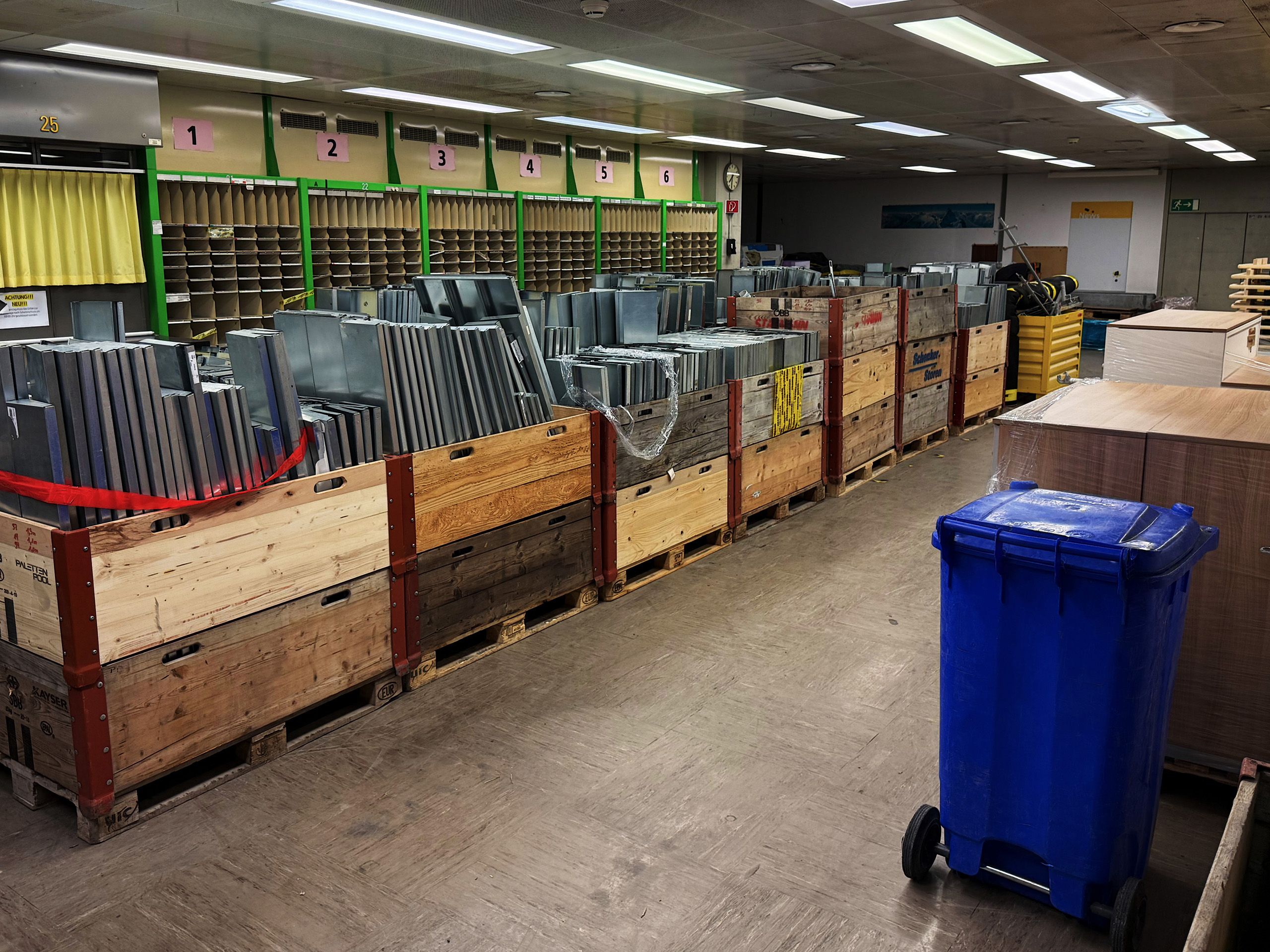
The Globus building in Basel is one of the historic landmarks in the old town, and its façade was to be preserved as part of the cityscape. In addition to the standard phases of a renovation project, this entailed the complete demolition of the interior structure while shoring up the existing façade from the inside.
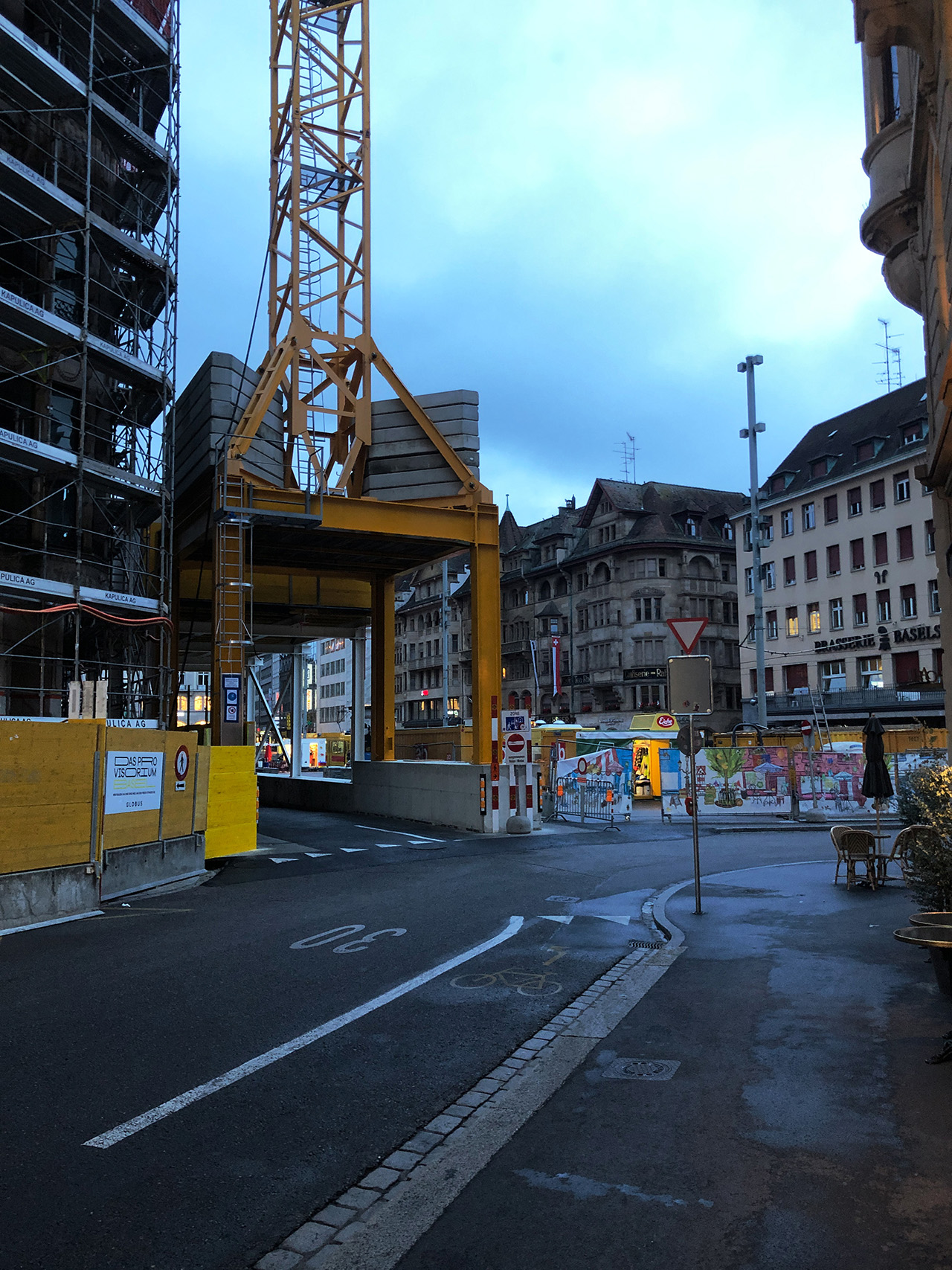
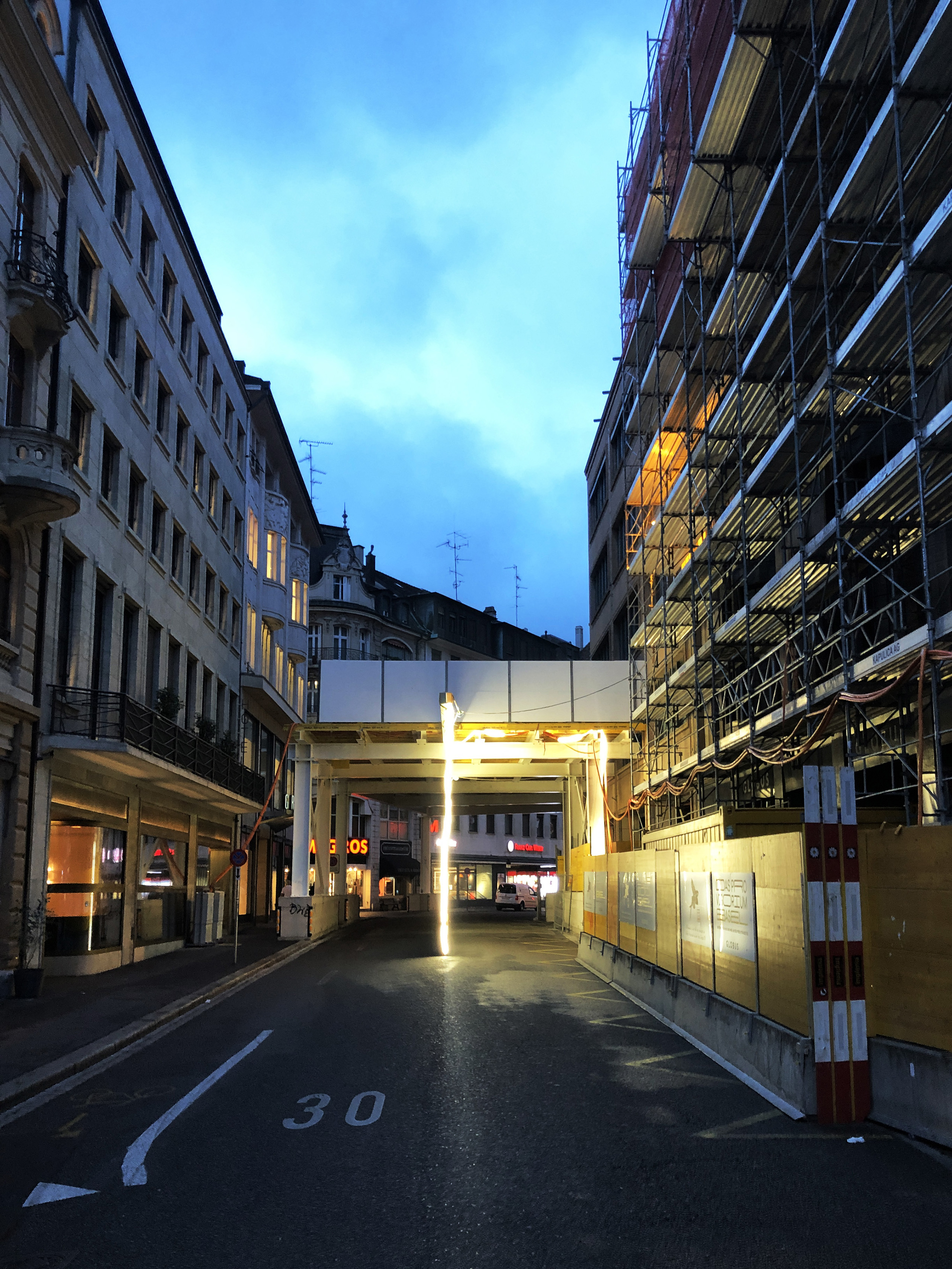
The greatest challenges in the heart of the Old Town on the market square were the central coordination of all construction site activities, emission monitoring, and the protection of third parties from the construction site infrastructure. In the urban space, there were a large number of factors involving pedestrians, deliveries, commercial traffic, and public transportation that had to be coordinated with construction site operations.
Due to the various construction phases on-site, as well as events, other construction sites, and daily traffic in the immediate vicinity, the construction layout had to be regularly adjusted and was subject to constantly changing requirements. Particularly noteworthy is the high volume of demolition trips right at the start of the construction period, followed by a nine-story shell behind the façade extending across three building structures (with over 8,300 m³ of concrete), as well as a new full-height glass façade (additional stories) and the subsequent detailed tenant fit-out.
solution
The construction logistics of the project were comprehensively planned to ensure that construction work was carried out efficiently and without interruption. The main objectives were:
- Minimizing disruptions in public spaces:
- Clear traffic management and coordination with public transport.
- Safety for residents, tenants and business facilities.
- Interference-free just-in-time delivery:
- Use of a logistics tool CLM (Software Amberg Loglay AG) and a consolidation center (HUB) in the area with a maximum of two transshipment points.
- Possibility to prefabricate components in the consolidation center.
- Increased productivity:
- Optimization of access and exit routes, waiting and loading zones and construction roads.
- Efficient use of vertical and horizontal conveyors.
- Coordination with stakeholders:
- Coordination with infrastructure and construction projects in the area and tenant traffic.
- Use of the LIM coordination platform (System Amberg Loglay AG) throughout the construction project period.
- Management tools:
- Use of LEAN, BIM and logistics tools to stabilize operational processes.
- A quality manager supervised the processes.
- Sustainable construction:
- Reducing environmental impact through reduced emissions.
Logistics process
The software enabled logistics process followed these steps:
- Scheduling and procurement of materials:
- Booking delivery in the logistics tool CLM
- Transportation of materials to the consolidation center
- Consolidation:
- Provision of goods according to work packages
- Prefabrication option in the consolidation center
- Delivery:
- Daily scheduling of material flows
- Registration of the construction site and provision of materials
- Discharge and shipment:
- Unloading the goods at the construction site
- Horizontal and vertical movement of materials
- Handover and disposal:
- Handing over the materials on the floor
- Disposal of empties and return transport
“The ambitious project goals for the Globus Basel construction project would hardly have been possible without innovative construction logistics. Amberg Loglay made a decisive contribution to the success of the project with logistics planning, specialist construction management and the CLM management platform. The inner-city space and tight schedule were analysed and translated into optimised processes in ongoing dialogue with the project team. The increase in efficiency from construction logistics was clearly noticeable for all project participants. I've learned a lot. Thank you so much!”
scores
Consolidation and digital construction logistics are crucial for ensuring a safe flow of materials and traffic in Basel's Old Town. By intelligently combining tradition with modern technology, the efficiency of logistics processes is optimized. Consolidation measures help bundle deliveries and reduce unnecessary trips, which in turn decreases traffic volume. Digital construction logistics enables more precise planning and coordination of all logistical operations, minimizing disruptions in urban areas. Thus, this combination offers a sustainable solution for the challenges of construction site logistics in the Old Town and contributes to improving the quality of life for residents and visitors alike.
Summary of Logistics Goals
- Efficiency: Optimizing construction processes through digital tools and consolidation centers.
- Sustainability: Reducing environmental impact through sustainable construction methods and logistics.
- Coordination: Alignment with all stakeholders and utilization of modern management tools such as BIM and LEAN.
- Achieving the LEED Certification (LEED – Leadership in Energy and Environmental Design
Our services


You might be interested in this